Digital Learning: How Technology Is Transforming College Education
Technology has become an essential part of modern education. From online classrooms and digital study materials to artificial intelligence and interactive learning platforms, technology is changing the way college students learn, communicate, and prepare for their careers.
Digital learning is not simply about studying through a computer or smartphone. It is about creating a more flexible, engaging, and personalized learning experience for students. Colleges today are increasingly adopting digital tools to complement traditional classroom teaching and provide students with access to knowledge beyond the classroom.
What Is Digital Learning?
Digital learning refers to the use of digital technologies, online resources, software, and educational platforms to support teaching and learning.
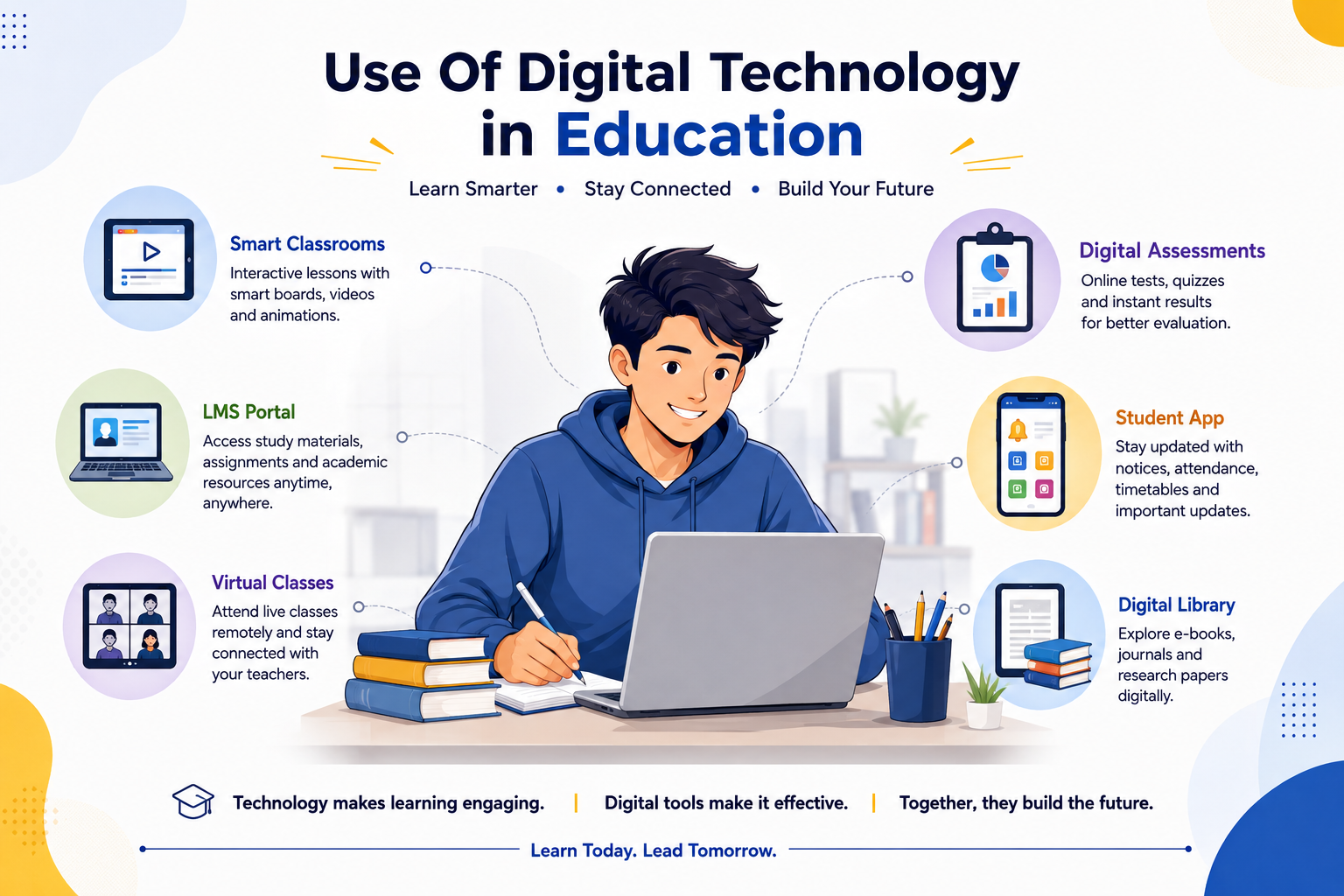
Students can access lectures, notes, presentations, e-books, assignments, quizzes, and other educational resources through digital devices. This allows learning to continue beyond fixed classroom hours and gives students greater flexibility in managing their studies.
How Technology Is Changing College Education
1. Learning Beyond the Classroom
One of the biggest advantages of digital learning is that education is no longer restricted to the classroom.
Students can access educational content from home, libraries, hostels, or almost anywhere with an internet connection. Recorded lectures and online resources also allow students to revisit difficult topics and learn at their own pace.
2. Interactive and Engaging Learning
Technology can make learning more interactive. Videos, animations, simulations, digital presentations, quizzes, and virtual activities can help students understand complex concepts more easily.
Instead of relying only on textbooks and lectures, students can explore subjects through multiple digital formats.
3. Personalized Learning
Every student learns differently. Digital learning platforms can provide students with the flexibility to spend more time on topics they find challenging and move faster through concepts they already understand.
With the growing use of artificial intelligence and smart learning systems, educational experiences can become increasingly personalized according to individual learning needs.
4. Easy Access to Study Resources
Digital education has made educational resources more accessible than ever.
Students can use e-books, online journals, educational videos, digital libraries, research papers, and other online resources to expand their knowledge. This also encourages students to explore topics beyond their regular curriculum.
5. Better Communication Between Students and Faculty
Technology has improved communication within educational institutions.
Students can receive announcements, assignments, feedback, and important academic information through digital platforms. Faculty members can also communicate with students more efficiently and provide guidance outside regular classroom hours.
6. Development of Digital Skills
Today's workplace requires more than academic knowledge. Students also need digital skills to succeed in their professional careers.
By using online platforms, productivity tools, presentation software, collaboration applications, and other technologies during their college years, students can develop practical digital skills that are valuable across different industries.
7. AI and the Future of Education
Artificial intelligence is becoming an important part of the education ecosystem.
AI-powered tools can assist students with research, brainstorming, language learning, personalized practice, and other academic activities. At the same time, students need to learn how to use AI responsibly, verify information, protect their privacy, and maintain academic integrity.
The goal should not be to replace teachers with technology but to use technology to support teachers and improve the overall learning experience.
Benefits of Digital Learning for College Students
Digital learning offers several benefits, including:
Greater flexibility in learning
Access to a wide range of educational resources
More interactive learning experiences
Opportunities for self-paced learning
Improved digital literacy
Easier communication and collaboration
Better exposure to modern workplace technologies
These advantages can help students become more independent, adaptable, and prepared for the changing demands of the professional world.
Challenges of Digital Learning
Although technology provides many opportunities, digital learning also comes with challenges.
Students may face distractions, excessive screen time, unreliable online information, or difficulties maintaining a consistent study routine. Not every student may have equal access to devices or high-speed internet.
For this reason, technology should complement traditional teaching rather than completely replace meaningful interaction between students and faculty.
The Future of College Education
The future of education is likely to combine traditional classroom learning with digital technologies. Blended learning, artificial intelligence, virtual learning environments, digital assessments, and online resources can work together to create a more flexible and engaging educational experience.
However, technology is only a tool. The quality of education still depends on effective teaching, meaningful student engagement, critical thinking, creativity, and strong mentorship.
Conclusion
Digital learning is transforming college education by making knowledge more accessible, learning more flexible, and education more connected to the digital world.
For college students, learning how to use technology effectively is becoming an important part of academic and professional development. By combining the strengths of technology with the guidance of experienced faculty, colleges can create learning environments that prepare students not only for today's careers but also for the opportunities of tomorrow.
At CERT College, embracing modern approaches to education can help students develop knowledge, confidence, digital skills, and the adaptability needed to succeed in a rapidly changing world.